The best seat in Costa Rica.
There are no bad seats on a twelve-seat Grand Caravan — only front-row windows onto reefs, rivers and rainforest. This is what it feels like to trade the highway for the sky.
There are no bad seats on a twelve-seat Grand Caravan — only front-row windows onto reefs, rivers and rainforest. This is what it feels like to trade the highway for the sky.
Flying SANSA feels less like an airport and more like a private departure. Our terminals are small — a counter, a café, a strip of tarmac. There are no security queues snaking around stanchions and no jet bridge sealing you off from the world.
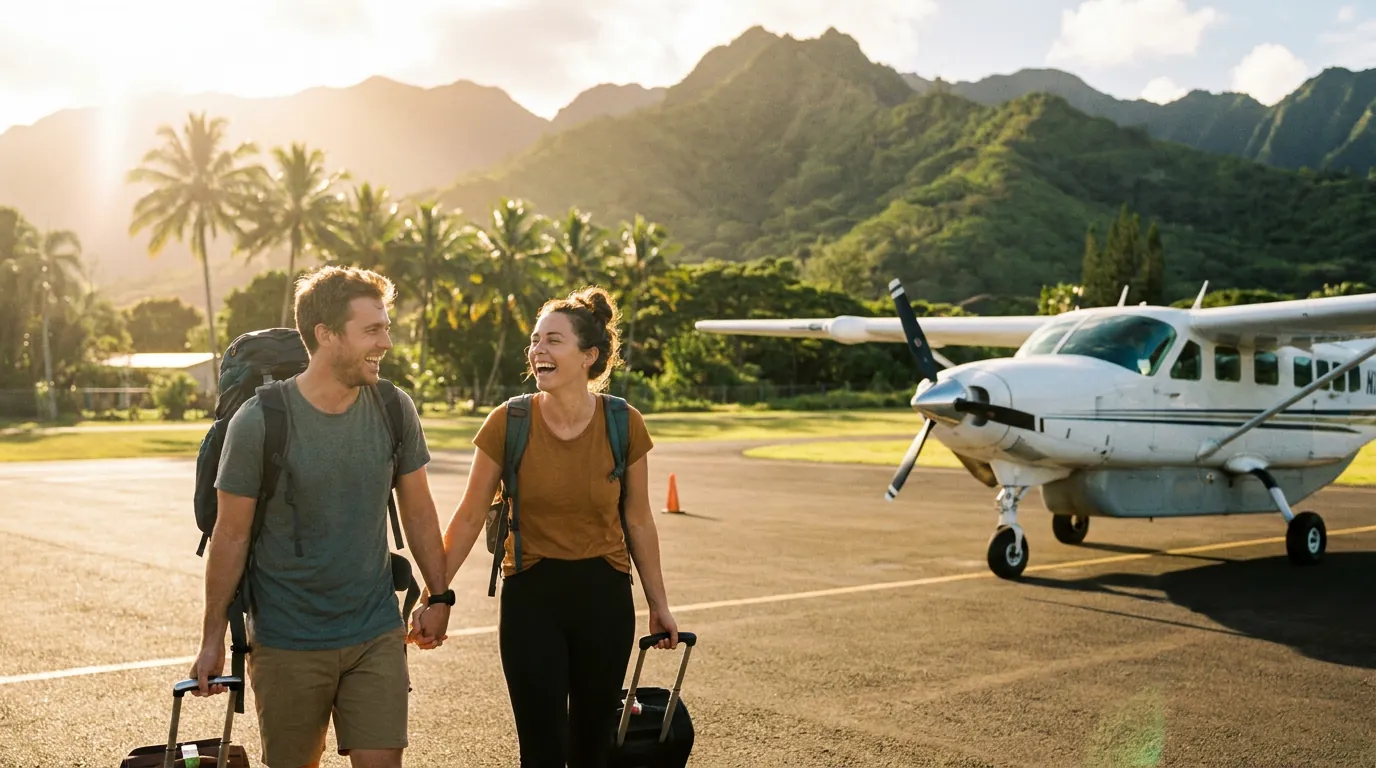
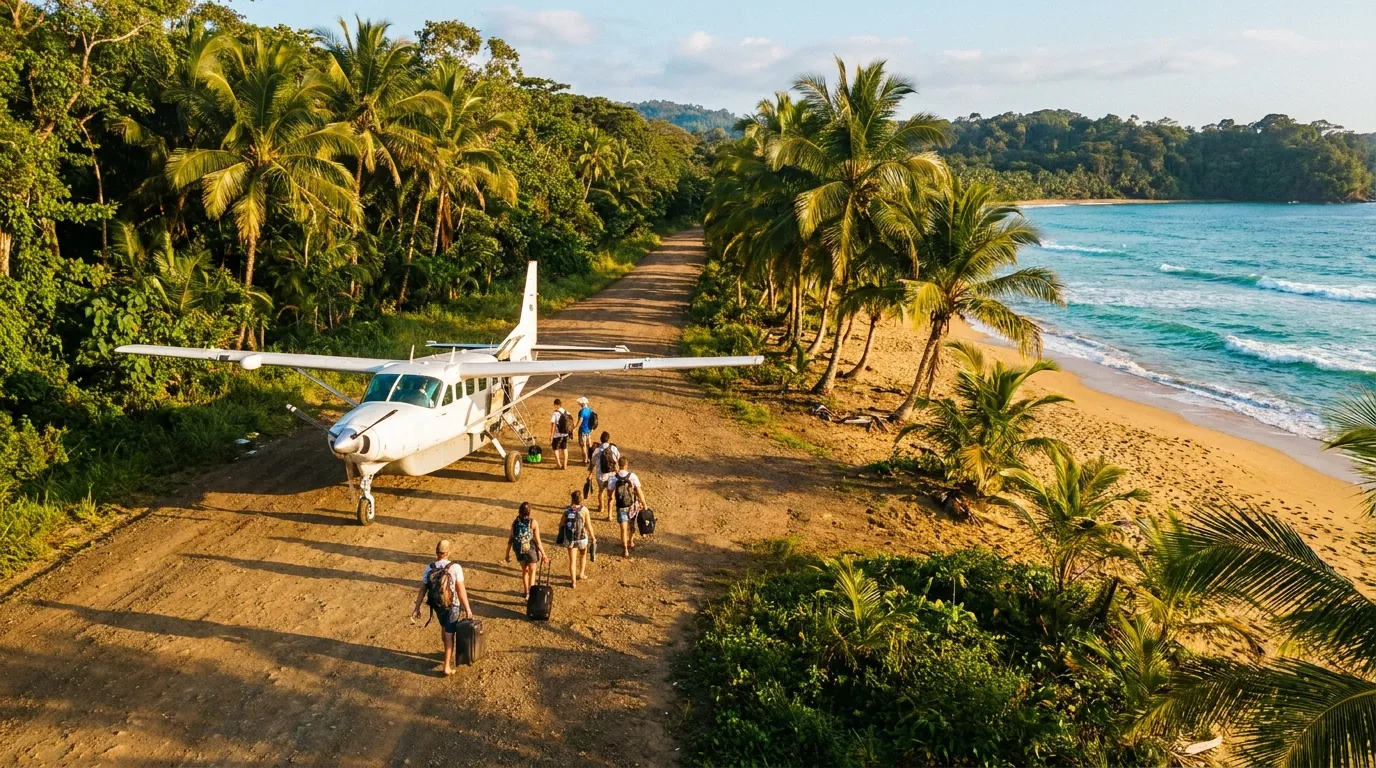
You check in, you walk out across the apron toward a bright little turboprop, and you climb the airstair yourself. Twelve seats. Wheels up within minutes of boarding. From your first flight, you'll wonder why anyone drives.
A typical San José departure to the Pacific — the whole arc of the journey, one small plane, endless window.
Step up to the SANSA counter at Juan Santamaría, hand over your bag, and step aside for a coffee. No hour-long security theatre — domestic screening here is quick and calm.
No gate number, no jet bridge. A crew member walks you out onto the apron, straight to the Grand Caravan warming up in the morning light. You climb the airstair and pick a window — every seat is one.
The turboprop spools up and San José falls away beneath you — red rooftops, coffee terraces, the green ridgelines of the Central Valley ringed by volcanoes. Within a minute you're above it all.
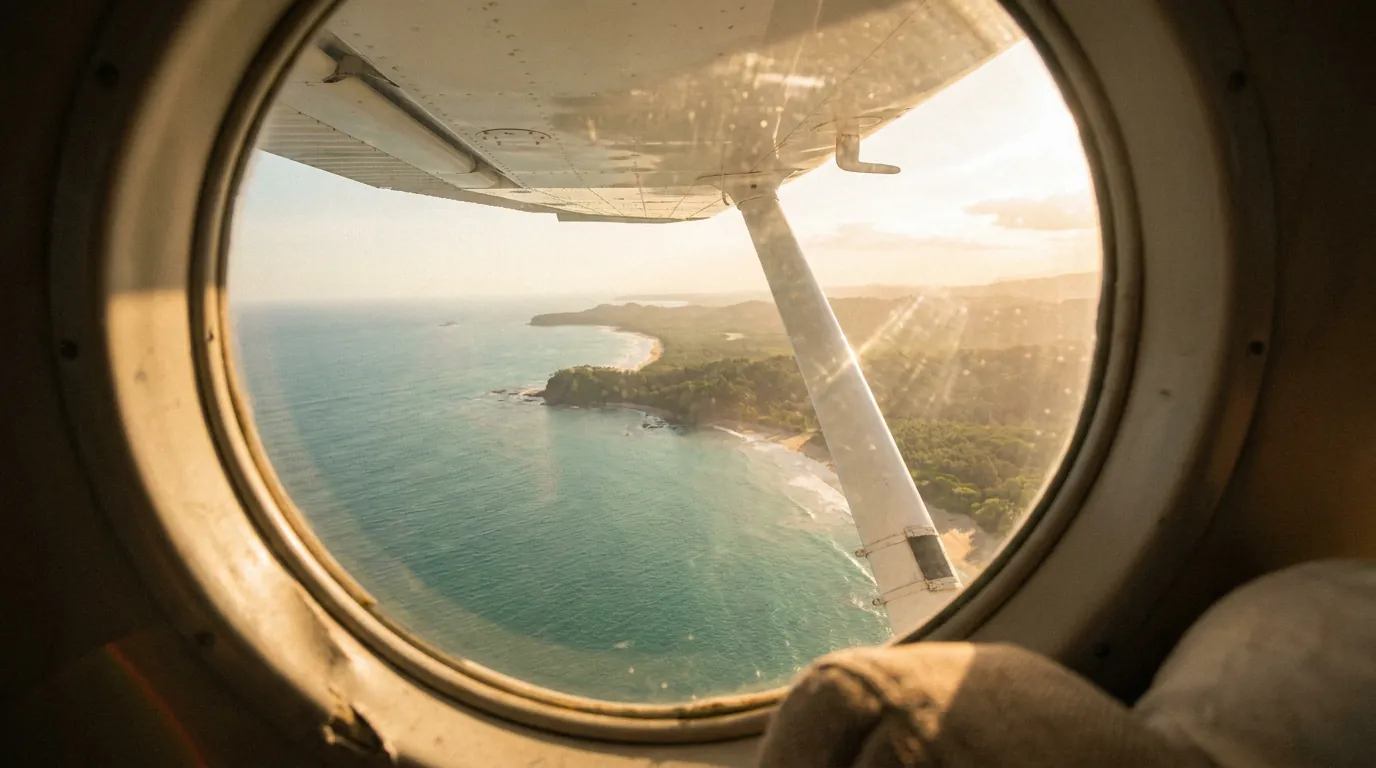
This isn't 35,000 feet. You cruise low enough to read the landscape — braided rivers, mangrove estuaries, the white line of surf against dark reef, scarlet macaws crossing below the wing over unbroken rainforest.
The nose dips and the coast rushes up to meet you. Your destination isn't a sprawling airport — it's a single strip of runway carved between the palms and the sand, close enough to hear the waves.
Wheels kiss the tarmac, the door opens, and warm tropical air rolls in. No baggage carousel to circle, no long taxi. You step down onto the strip and the beach is a five-minute walk. Pura vida.
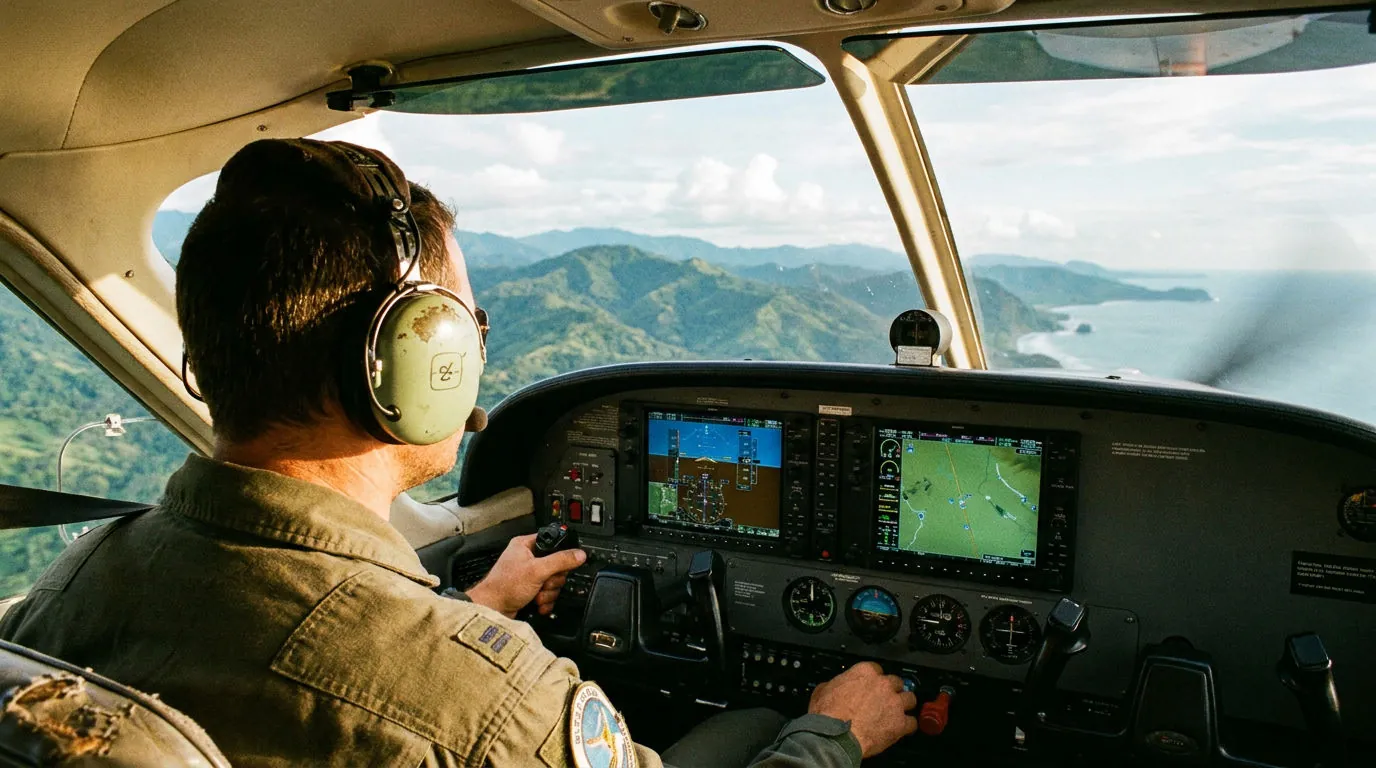
On a Grand Caravan there's no cockpit door to shut you out. From the cabin you can see the pilots' hands on the controls, the same volcano line filling the windscreen that fills your window — and, if the mountains are clear, Arenal or Poás off to the north.
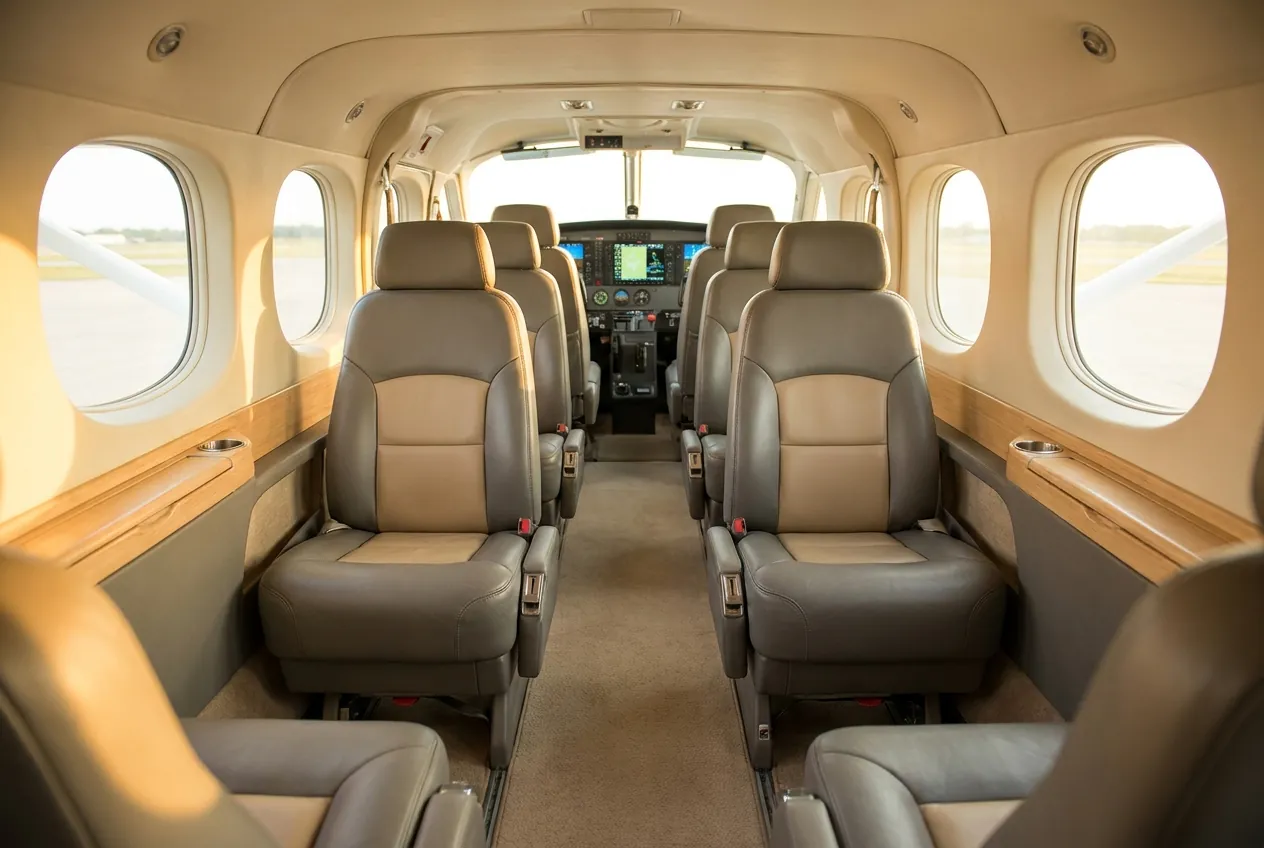
The Caravan's wing sits above the cabin, so nothing blocks the view down. Big oval windows, a single seat on each side of the aisle, and the low, steady hum of the PT6A turboprop. It's intimate — you'll trade grins with strangers when the coast appears.
Small planes have their own gentle rules. None of them are a hassle — they're part of the charm.
Each fare includes a free carry-on plus 30 lb (14 kg) of checked baggage. Soft-sided duffels fit the hold better than hard cases. Heading somewhere remote? A beach and a rainforest don't ask for much of a wardrobe.
On a twelve-seat plane, balance matters. At check-in we may ask your weight and assign your seat for a smooth ride — it's routine on small aircraft everywhere. It's discreet, it's quick, and it keeps the flight beautifully level.
This is the most photogenic flight you'll ever take, so keep a phone or camera within reach. Fly lower and closer to the terrain and you may feel a little more movement than a jet — if you're prone to motion, a light snack and a motion-ease tablet beforehand go a long way.
“The wheels left San José and twenty-five minutes later touched a strip in the jungle. In between was the whole coastline of a country, close enough to name the beaches.”
— A first-time SANSA passenger
Pick a coast, pick a morning, and trade the highway for twenty-five minutes of the best view in Costa Rica.