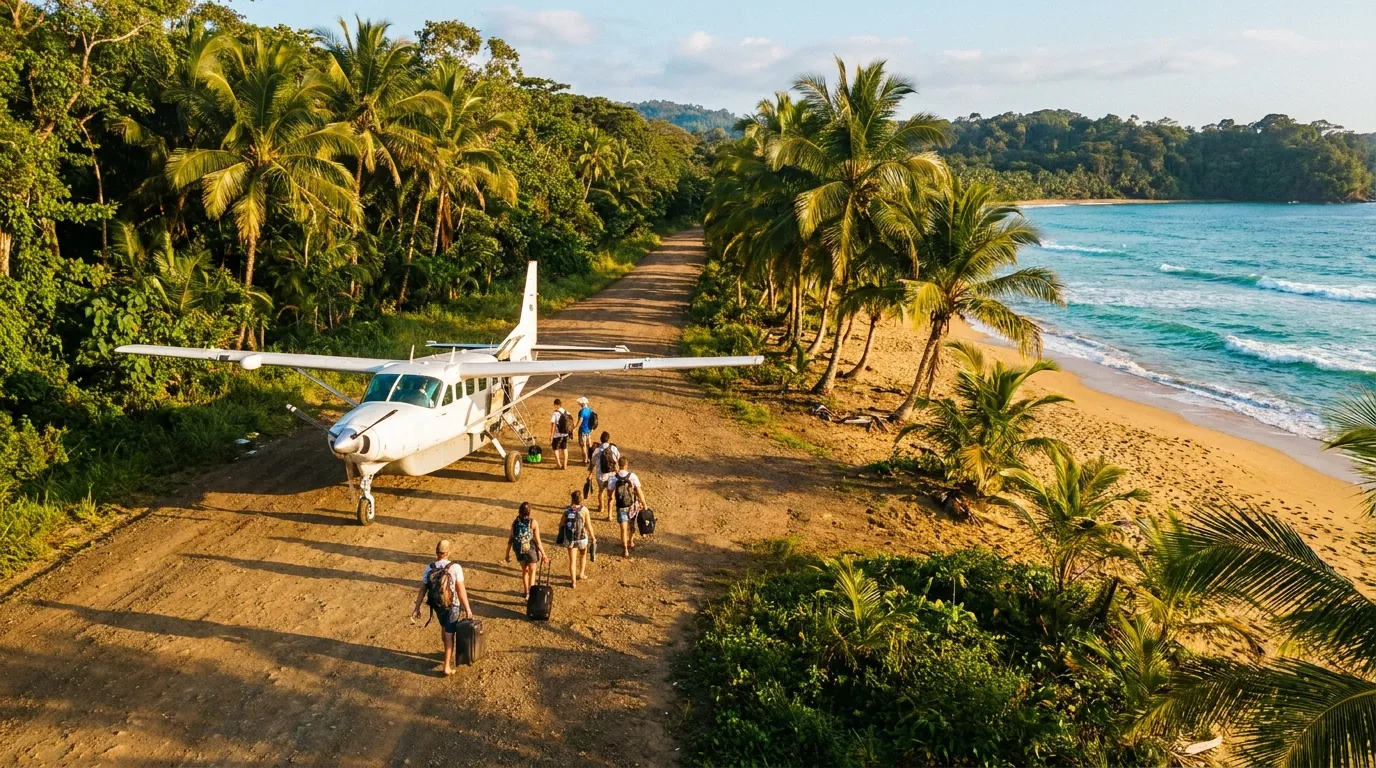
Our entire fleet is the Cessna 208B Grand Caravan — the single most trusted bush aircraft in the tropics. It thrives exactly where Costa Rica's most beautiful places hide: short grass, gravel and beachside airstrips carved out of jungle, ranch land and coastline.
A single-engine turboprop with an almost unfair reputation for toughness. High-set wings keep the propeller and gear clear of dust and debris on rough strips, while the reliable Pratt & Whitney PT6A gives it the short-field muscle to lift a full cabin off six hundred metres of grass and clear the tree line with room to spare.
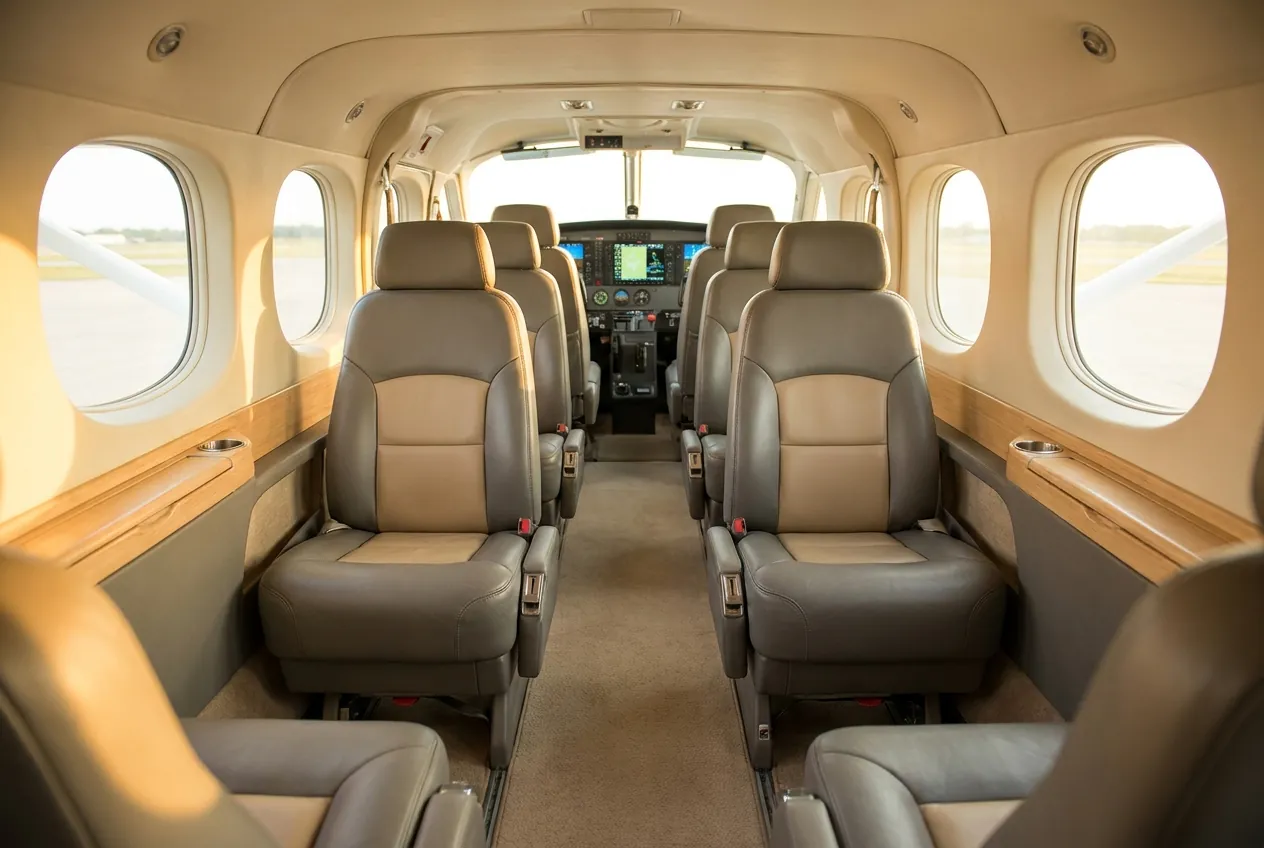
Twelve passengers, two crew, and a cabin built around the view. Every seat sits beside a generous window — because on these routes the scenery is the reason to fly.
Specifications are typical for the Cessna 208B Grand Caravan in a 12-seat commuter configuration.
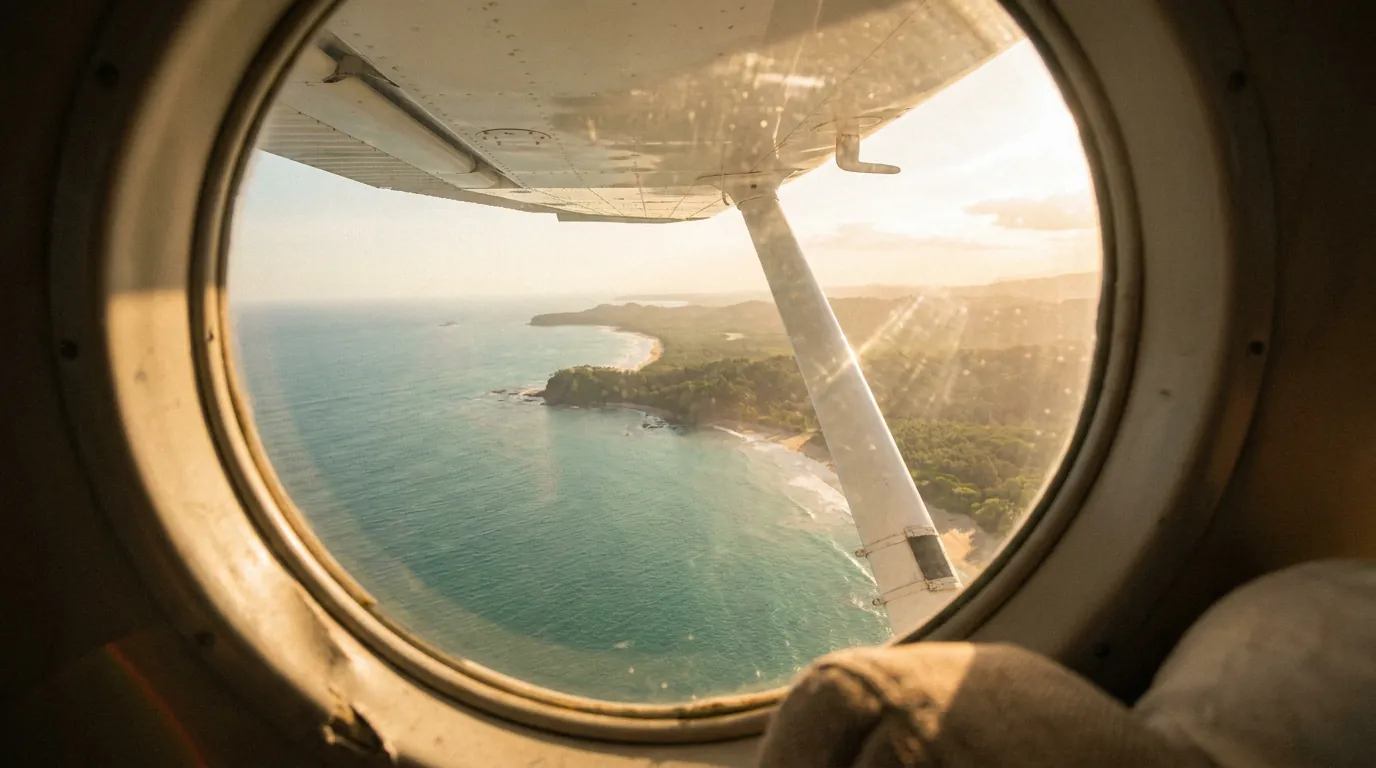
On most airliners the wing sits below the cabin and quietly steals the best part of the view. The Grand Caravan is the opposite: its wing rides high above the windows, leaving the ground completely open beneath you.
Which means an uninterrupted look straight down at what makes this country famous — the turquoise scallops of the Nicoya coast, the green maze of Tortuguero's canals, Arenal standing alone above the plains. Left side or right, front row or back, there are no bad seats. There is only Costa Rica, unrolling below the glass.

Flying short strips in mountain and coastal weather demands more rigour, not less. Everything about how we maintain the fleet and train our crews is built around one idea: get you there, and get you there safely — every single time.
Each aircraft follows a manufacturer-approved inspection schedule to civil-aviation standards, with checks logged by interval and flight hours. The PT6A turboprop is one of the most proven engines ever built — flown, watched and serviced by the numbers.
Our captains fly these routes daily and know every strip by name — the crosswind at Tamarindo, the mountain approach into Drake Bay, the short field at Tortuguero. Short-field and terrain flying is a specialty here, not an occasional exception.
Tropical weather moves fast, so we plan for it. Flights are delayed or rerouted the moment conditions fall below our limits — never pushed. A morning departure that shifts an hour is a good decision, and we would rather make it than beat the clock.

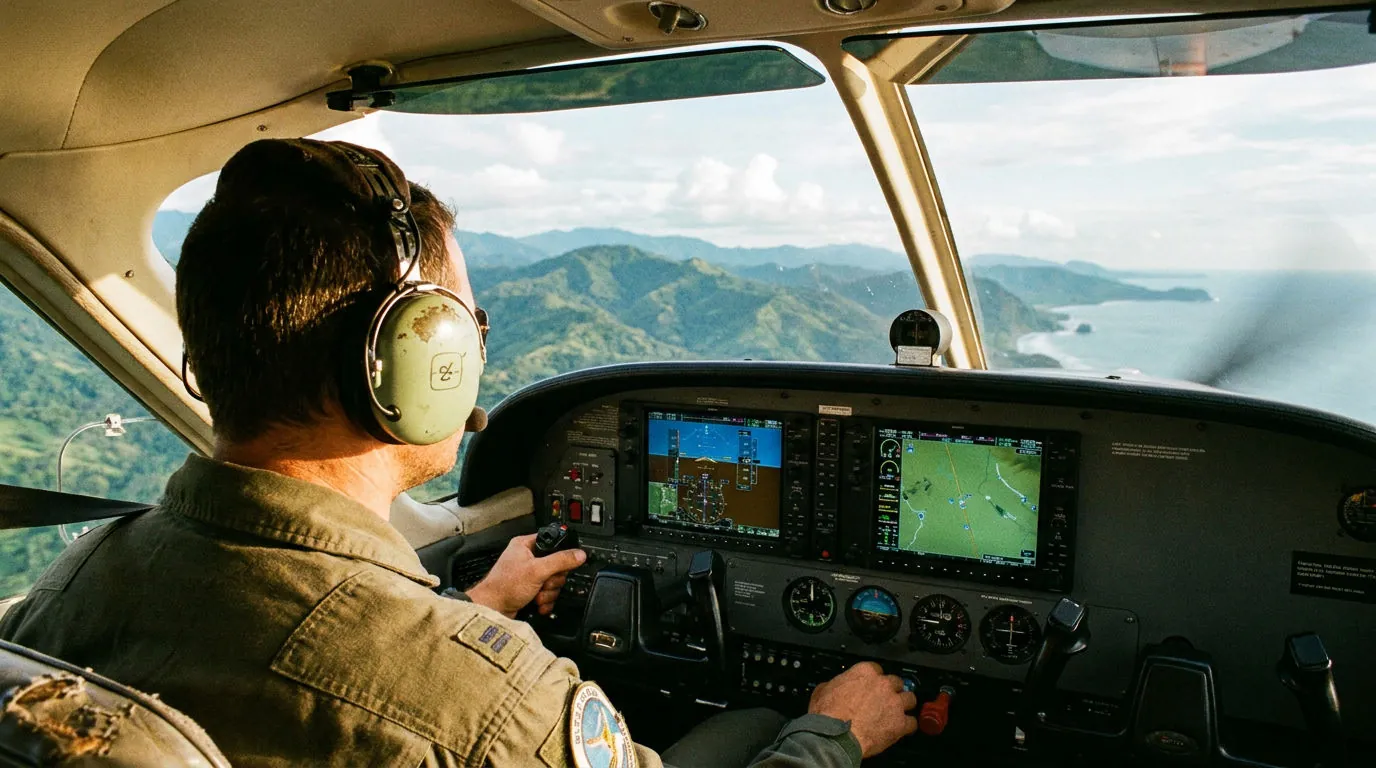
Up front sits a professional flight crew flying a modern, glass-panel cockpit — GPS navigation, weather radar and terrain awareness, all in a cabin small enough that you can watch the whole thing happen. There is no curtain, no distance. On a SANSA flight the flight deck is simply the best seat on the plane, shared with you.
Our crews carry commercial licences and thousands of hours over Costa Rican terrain, with recurrent training on the exact strips they serve. When the wing tips over your beach, someone who has done it a thousand times is at the controls.
See where the Grand Caravan can take you — and how little of your day it takes to get there.